|
Peter Perkins Pitchlynn In the early 1830's when George Catlin painted Hat-choo-tuck-nee
("The Snapping Turtle"), familiarly called Peter Pitchlynn by
whites, Of mixed white and Indian ancestry, Pitchlynn was well educated in both traditions and served as an effective liaison with the federal government. Impressive in his bearing--"as stately and complete a gentleman of nature's making as ever I beheld," wrote Charles Dickens--he became principal chief in 1860 and served as representative of his tribe in Washington after the Civil War. A gifted orator, Pitchlynn addressed the President and several congressional committees in defense of Choctaw claims. He died in Washington, D.C., in 1881 and was buried in the Congressional Cemetery, where the Choctaw nation placed a monument in recognition of his service and allegiance to his people. Peter P. Pitchlynn was born in Noxubee County, Mississippi, January 30, 1806. His parents were Colonel John Pitchlynn, a white man, and Sophia Folsom, a Choctaw. He began his education by attending a Tennessee boarding school located about 200 miles from his home in Mississippi. Later he attended an Academy in Columbia, Tennessee. To complete his education he became a graduate of the University of Nashville. The main removals from Mississippi took place during 1831, 1832, and 1833. The sufferings of the emigrants were almost beyond belief. It was a difficult journey at best --- 350 miles through a wild unsettled country of vast swamps, dense forest, impenetrable canebrakes, and swollen rivers. Added to this was a great deal of blundering and inefficiency on the part of the War Department. Additional suffering and loss of life was caused by one of the worst blizzards in the history of that region, which broke upon the emigrants who were removed during the Winter of 1831-32; and the cholera epidemic, which swept down the Mississippi and caught those who were crossing the following summer. The population of the tribe was permanently decreased by the losses sustained during this terrible experience. There is more restraint, but no less bitterness in this letter from Peter Pitchlynn to a Federal Official: "I beg, sir, that for a whole nation to give up their whole country, and remove to a distant, wild, and uncultivated land, more for the benefit of the Government than the Choctaws, is a consideration which, I hope, the Government will always cherish with the liveliest sensibility. The privations of a whole nation before setting out, their turmoil and losses on the road, and settling their homes in a wild world, are all calculated to embitter the human heart." Excerpt from "The Rise and Fall of the Choctaw Republic" by Angie Debo After he obtained his degree he returned to his home in Mississippi and became a farmer. His first act was to erect a comfortable log cabin so he could marry Rhonda Folsom, his first cousin. Reverend Cyrus Kingsbury, a missionary, performed the ceremony. After his first wife’s death, Peter married a widow, Mrs. Caroline Lombardy. Pitchlynn was instrumental in closing all the shops selling liquor to the Indians in Mississippi. As a Council member he proposed the establishment of a school for Choctaw Children to be located in Kentucky. Because of his efforts the Choctaw Academy became a reality. He was also the forerunner of the removal of the Indian tribes to Indian Territory. The Choctaws looked upon him as their philosopher and friend. He represented them in Washington for many years. Peter P. Pitchlynn was elected Principal Chief of the Choctaws in 1864 and served until 1866. After his tenure he retired in Washington, D. C. and devoted his attention to pressing the Choctaw claims for lands sold to the United States in 1830. In addition to being a regular attendant of the Lutheran Church, he was also a prominent member of the Masonic Order. He passed away January 17, 1881 in Washington, D. C. He is buried in the Congressional Cemetery where an impressive marker was erected over his grave by a grateful Choctaw Nation. Source: http://freepages.cultures.rootsweb.com/~choctaw/peter.htm
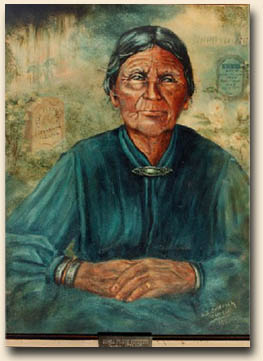
Sophia Folsom Pitchlynn born in 1773. Her Indian Name was "Lk-lo-ha-wah" (loved but lost). Sophia was the daughter of Ebenezer Folsom and his Choctaw wife, Natika. Sophia married in 1804 to Major John Pitchlynn of Scottish decent, who was reared by the Choctaws after the death of his father, Isaac Pitchlynn. John was an interpreter for the Choctaw Nation, appointed by President George Washington. He served as interpreter for all the treaties between the Choctaw Nation and the United States. Sophia bore ten children to John
Pitchlynn. They were: Sophia had three step-children: Major John Pitchlynn died in 1835 before the family moved to Indian Territory. After John's death, Sophia decided to move to Indian Territory. She settled on a plantation in the Little River area in what is now the far southeastern part of Oklahoma. Sophia managed her plantation efficiently and was known to have been very just in all things. She came under the influence of the noted missionary Cyrus Byington and was a devoted Christian. Even though she could speak English, she refused to do so, speaking only Choctaw and for the most part served only Choctaw food. Sophia lived to see her son, Peter P. Pitchlynn rise to positions of prominence in the Choctaw Nation. Sophia brought many plants and flowers with her from Mississippi. The family has kept her yellow roses growing for more than 150 years. Sophia died in 1871 at the age of 98 and is buried at the historic Garland family cemetery near present day Tom in Southeastern McCurtain County, Oklahoma. Her grave is the oldest grave in the State of Oklahoma. It also has a historical marker on this site. Submitted by Bob Sources: CHAHTA - CHOCTAW GENEALOGY & RESEARCH
back to LIST Copyright
2002-2006, all rights reserved Page design: Some
graphics by:
|

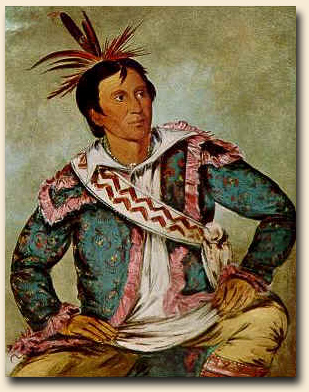 the future Choctaw chief had already become a figure of influence.
Having eradicated polygamy in his tribe and stopped the liquor traffic,
Pitchlynn had been rewarded in the 1820's with election to the Choctaw
National Council. In that capacity, helped select new lands for his
people when they were moved west of the Mississippi.
the future Choctaw chief had already become a figure of influence.
Having eradicated polygamy in his tribe and stopped the liquor traffic,
Pitchlynn had been rewarded in the 1820's with election to the Choctaw
National Council. In that capacity, helped select new lands for his
people when they were moved west of the Mississippi.